Sixteenth Air Force (16th Air Force), also called Air Forces Cyber, is the US Air Force’s information warfare numbered air force, formed in 2019 by merging the 24th and 25th Air Forces. It combines cyber, intelligence, surveillance and reconnaissance (ISR), electronic warfare and information operations.
This guide explains what it does, why the merger happened and how its pieces fit together. It is an independent explainer, not an official Air Force product. For the wider event context, see the AFITC conference guide.
What 16th Air Force does
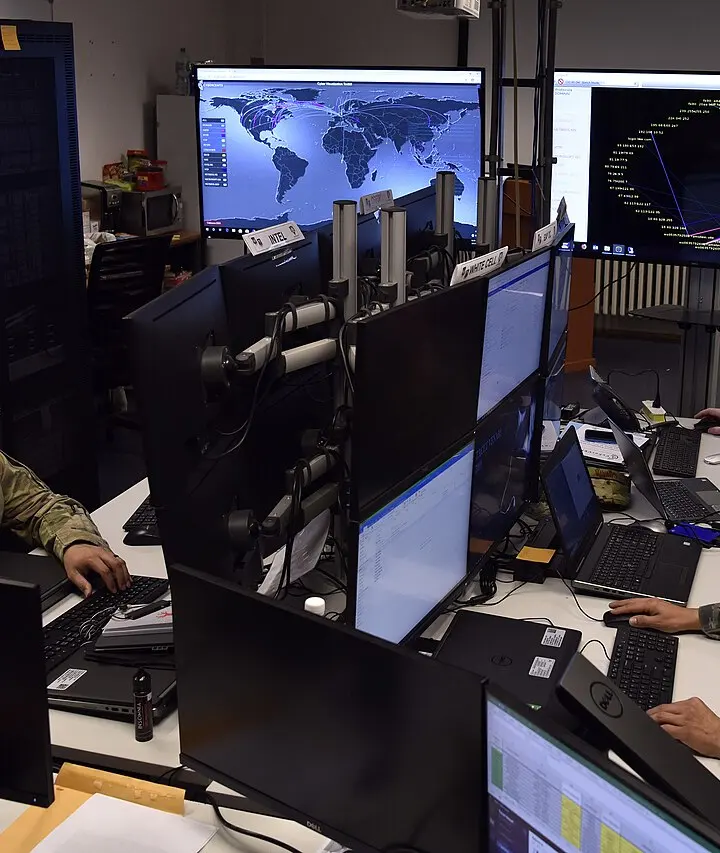
The unit’s official fact sheet describes it as “the Air Force’s Information Warfare Numbered Air Force”, headquartered at Joint Base San Antonio-Lackland, Texas. Its job is to bring together cyberspace, electromagnetic spectrum, information, ISR, weather and related capabilities to produce information warfare outcomes for combatant commanders and air components. The fact sheet lists who the commander answers to: the NSA director for cryptologic activities, US Cyber Command for defending the Air Force part of the Defense Department network and for presenting cyber forces, and Air Combat Command for organizing, training and equipping.
SIGNAL Magazine, the AFCEA publication, reported when the unit was being stood up that its commander would also be the Air Force’s network operations crew manager, running the networks the service provides at the unclassified, secret and higher classification levels. The commander also represents the Air Force to US Cyber Command, a relationship explained in the guide to US Cyber Command.
Where it came from: the 24th and 25th Air Forces
Two predecessors supplied the people. According to Air Force Times, the 24th Air Force (Air Forces Cyber) supplied the cyber personnel and the 25th Air Force, responsible for global ISR, supplied the intelligence personnel. The 24th had been reassigned from Air Force Space Command to Air Combat Command the previous summer, which put both organizations in the same major command.
The two had already worked closely, and the merger formalized that. The service said in April 2019 that combining cyber, ISR, electronic warfare and information operations “will increase unity of effort across these capabilities.” Air Combat Command’s commander, Gen. Mike Holmes, called the merger “the next step in leveraging and integrating new ideas and technologies.”
The 2019 merger and stand-up
The Air Force announced the merger in an April 4, 2019 press release and anticipated an activation ceremony that summer. The stand-up came later: US Cyber Command’s published history records that the 24th Air Force merged with the 25th to become 16th Air Force (Air Forces Cyber) as of 11 October 2019. The name came from a dormant unit, and General Holmes said its history included Cold War and Balkans operations, as SIGNAL reported.
Maj. Gen. Timothy Haugh, who led the 25th Air Force, was selected to command the new organization. Nextgov noted that Haugh had also previously directed the Cyber National Mission Force at US Cyber Command. SIGNAL reported that both predecessors would remain stationed at San Antonio-Lackland.
Why the Air Force merged them
Air Force Times reported that the move aligned the service with the 2018 National Defense Strategy and created its first “Information Warfare” numbered Air Force. Defense News added a practical reason: under the old arrangement intelligence operators served under a separate command, which caused problems with command relationships and team oversight. Putting both under one commander removed that split.
The commander also carries a joint job. At the stand-up, SIGNAL reported that the commander would lead Joint Force Headquarters Cyber Air Force, supporting US European Command, US Transportation Command and US Strategic Command. The current fact sheet lists US Cyber Command, US European Command, US Space Command and US Strategic Command for planning and executing offensive and defensive cyberspace operations. That is how an Air Force numbered air force plugs into the combatant commands that need cyber effects.
How the mission areas fit together
The Air Force presented the merger as a way to synchronize capabilities that previously sat under separate commanders. Nextgov reported Gen. Holmes saying the combination would let ISR teams better measure the effects of cyber campaigns and influence operations. He added that the Air Force’s cyber capabilities mainly sit in Mission Defense Teams that protect networks, and that the new organization was not interested in building standalone information warfare campaigns.
Defense News later described the teams the unit provides: combat mission teams that conduct cyber operations for combatant commands, mostly offensive, and cyber support teams that provide intelligence and mission planning. For the doctrine behind these terms, the guide to cyberpower and Air Force doctrine covers the offensive, defensive and network-operations missions.
Wings and locations
The fact sheet says 16th Air Force operates across nine wings and two centers. Four of the wings show the spread of its work.
| Wing | Location |
|---|---|
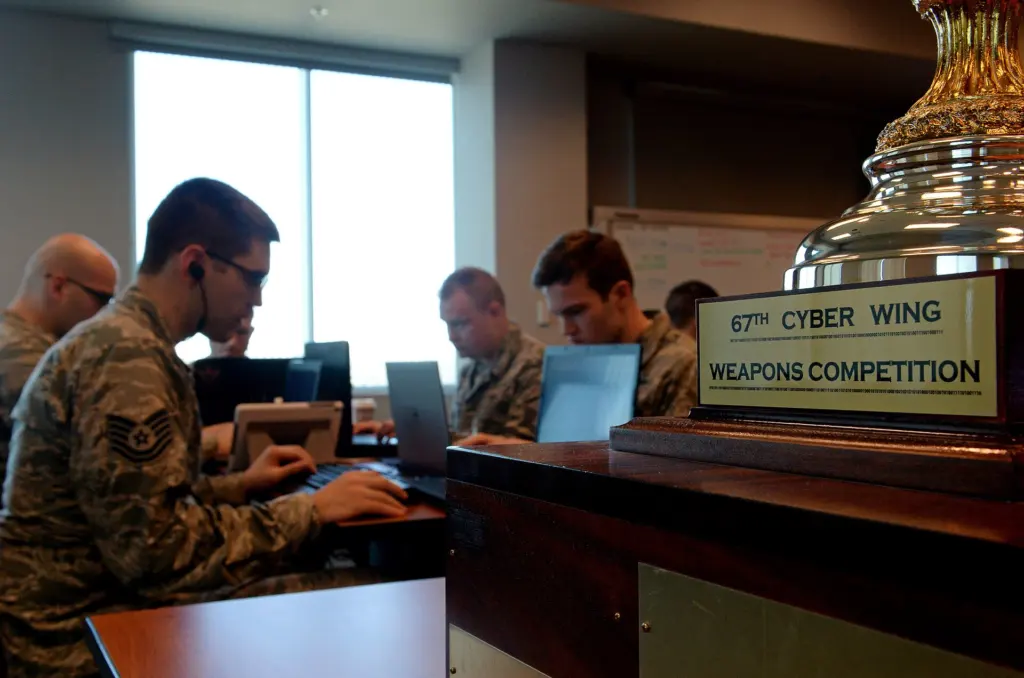
| 67th Cyberspace Wing | Joint Base San Antonio-Lackland, Texas |
| 70th Intelligence, Surveillance and Reconnaissance Wing | Fort George G. Meade, Maryland |
| 480th Intelligence, Surveillance and Reconnaissance Wing | Joint Base Langley-Eustis, Virginia |
| 557th Weather Wing | Offutt Air Force Base, Nebraska |
Source: the Sixteenth Air Force fact sheet, which lists the other wings and centers; the 557th Weather Wing’s move into the new organization is also reported by SIGNAL.
The weather wing is a reminder that the unit’s information mission is broader than cyber alone. The fact sheet calls the 557th the Air Force’s only weather wing, and SIGNAL reported that it provides weather intelligence to the US military, the federal government and allies.
Where 16th Air Force comes up at events
Air Force cyber and information warfare units are a regular topic at military technology conferences, where leaders explain how forces are organized and trained. The overview of government cybersecurity conferences lists such events, and the AFITC conference guide covers the Air Force event held in Montgomery, Alabama. For the other commands, rules and career paths in this field, see the defense cybersecurity guide.
Frequently asked questions
What is 16th Air Force?
It is the Air Force’s information warfare numbered air force, combining cyber, ISR, electronic warfare and information operations under one commander.
When was 16th Air Force created?
The Air Force announced the merger in April 2019, and US Cyber Command’s history dates the new organization from 11 October 2019.
Which units merged to form it?
The 24th Air Force, which supplied cyber personnel, and the 25th Air Force, which handled ISR.
Where is it headquartered?
At Joint Base San Antonio-Lackland, Texas.
How does it relate to US Cyber Command?
It is the Air Force’s service component to US Cyber Command, listed by CYBERCOM as Sixteenth Air Force (Air Forces Cyber). Its commander presents Air Force cyber forces to the command, per the unit’s fact sheet.
Photo credits: US Air Force photo by Tech. Sgt. Robert Biermann (Public domain (US Government work)); US Air Force photo by Tech. Sgt. Robert Biermann (Public domain (US Government work)).