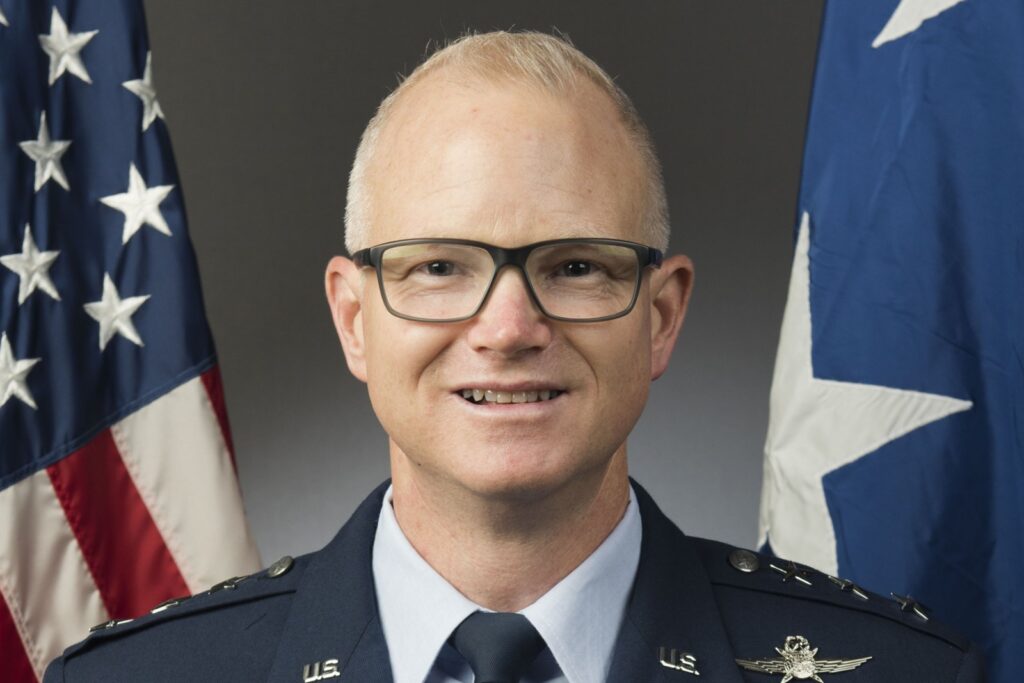
Christopher Weggeman is a retired U.S. Air Force lieutenant general and F-16 pilot who commanded Twenty-Fourth Air Force and Air Forces Cyber, then retired in 2021 after 34 years of service, according to his Deloitte biography and Wikipedia.
This biography follows his official U.S. Air Force biography (archived copy) and other published profiles. It covers his education, flying career, commands, cyber assignments, promotions and retirement. It is a companion to our guide to the Air Force IT and Cyberpower conference, the training and education event for the service’s IT and cyber community. An overview of the Defense Department’s cyber organisations is in the defense cybersecurity guide.
Quick facts
| Item | Detail |
|---|---|
| Full name | Christopher P. Weggeman |
| Service | U.S. Air Force, 1987 to 2021 |
| Commissioned | Purdue University, Air Force ROTC, 1987 (distinguished graduate) |
| Degree | Bachelor of Science, Biology, Purdue University |
| Highest rank | Lieutenant general (effective August 21, 2018) |
| Cyber command | Twenty-Fourth Air Force and Air Forces Cyber, June 2016 to July 2018 |
| Final assignment | Deputy Commander, Air Combat Command, from August 2018 |
| Flying | Command pilot, more than 2,800 flight hours, including the F-16C and F-16D |
Source: his archived U.S. Air Force biography (current as of March 2019), with service years 1987 to 2021 and his final assignment from Wikipedia.
Education and commissioning
His Air Force biography states that he is a 1987 graduate of Purdue University, where he earned a Bachelor of Science in biology and was commissioned through Air Force ROTC as a distinguished graduate, with a second lieutenant date of rank of August 13, 1987.
The same biography lists his later military education: he was a distinguished graduate of Squadron Officer School in 1993 and of the U.S. Fighter Weapons Instructor Course at Nellis Air Force Base, Nevada, in 1994. It also records a Master of Military Arts and Sciences from the Army Command and General Staff College in 1999 and a Master of Science in strategic studies, with academic distinction, from Air War College in 2006. The same list shows he completed the Harvard Cybersecurity Program in 2015.
Early flying career
According to his Air Force biography, he began with Euro-NATO Joint Jet Pilot Training at Sheppard Air Force Base, Texas, from November 1987 to December 1988, again as a distinguished graduate. After F-16C training at MacDill Air Force Base, Florida, the biography shows he flew the F-16 at Hill Air Force Base, Utah, from October 1989 to June 1994.
A local news blog’s profile, published at his retirement in 2021, says his service included flying F-16s during Desert Shield and Desert Storm. His official biography then lists a weapons officer post with the 35th Fighter Squadron at Kunsan Air Base, South Korea, from January 1995 to January 1996, and a tour as an instructor in the F-16 Division of the U.S. Air Force Weapons School at Nellis from January 1996 to June 1998. The biography describes him as a command pilot with more than 2,800 flight hours, flying the F-16C, F-16D, T-38C, AT-38C, T-6A, AT-38B and T-1A.
Squadron, group and wing command
The Air Force biography calls him a combat-proven F-16 pilot who commanded at the squadron, group, wing, numbered air force and component commander level. Its assignment list shows he commanded the 421st Fighter Squadron at Hill from July 2003 to July 2005 and the 12th Operations Group at Randolph Air Force Base, Texas, from July 2006 to June 2008. The same list places him from June 2008 to July 2010 at the Allied Air Component Command headquarters at Ramstein Air Base, Germany, as director of staff and later commander of its Air Force element.
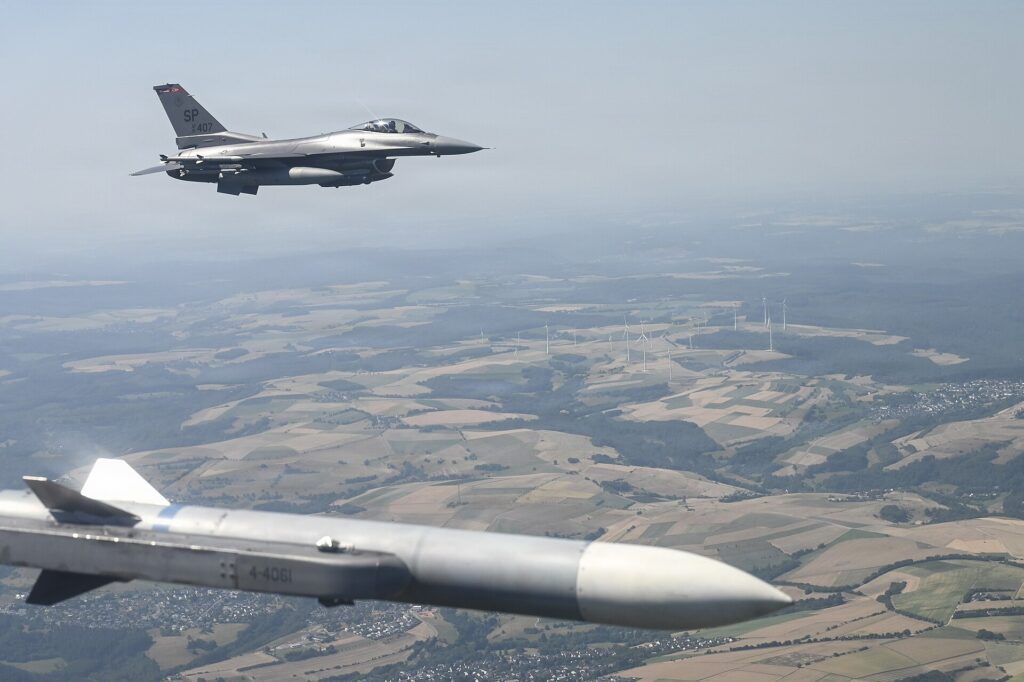
From July 2010 to July 2012 he commanded the 52nd Fighter Wing at Spangdahlem Air Base, Germany, per the same biography. The local blog profile says that during this 2010 to 2012 wing command he was responsible for 16,000 people, including families.
Joint Staff and U.S. Cyber Command
His move into cyberspace came at the joint level. His Air Force biography lists three posts in a row: Deputy Director for Command, Control, Communications and Computers/Cyber on the Joint Staff (J6) at the Pentagon from July 2012 to June 2014; Deputy Director of Future Operations (J3) at U.S. Cyber Command, Fort George G. Meade, Maryland, from June 2014 to June 2015; and Director of Plans and Policy (J5) at U.S. Cyber Command from June 2015 to June 2016.
His Deloitte biography says that during his last nine years in the Air Force as a general officer he served in key Joint Staff and U.S. Cyber Command positions, and calls him a founding architect of U.S. Cyber Command’s Cyber Mission Forces. For background on how the service frames this work, see the explainer on what cyberpower means.
Twenty-Fourth Air Force and AFCYBER
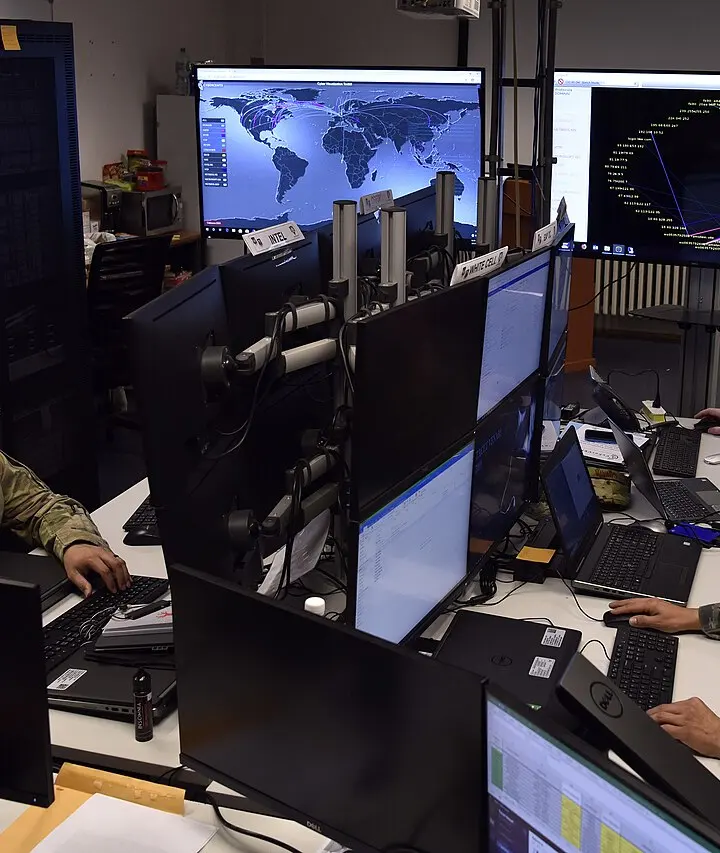
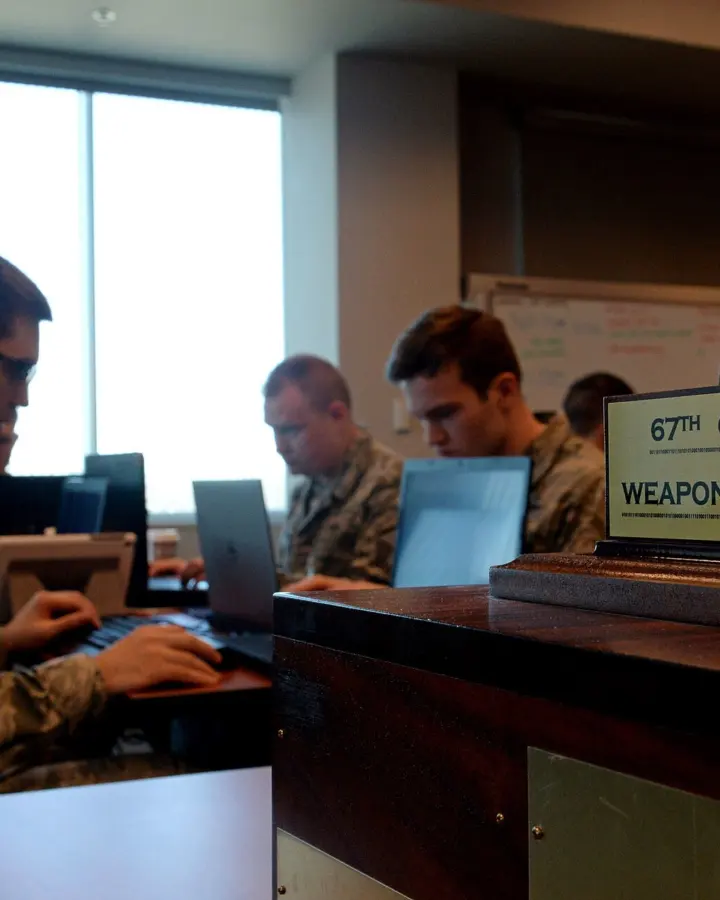
From June 2016 to July 2018 he commanded Twenty-Fourth Air Force and Air Forces Cyber at Joint Base San Antonio-Lackland, Texas, and the Joint Force Headquarters-Cyber for the Air Force, according to his Air Force biography. He held the post as a major general, a rank effective June 24, 2016, per the same biography.
A Harvard Kennedy School profile written during that command says he was responsible for providing Air Force component and combatant commanders with trained and ready cyber forces. The profile states that Twenty-Fourth Air Force and AFCYBER personnel build, operate, secure, defend and extend the Air Force portion of the Department of Defense global network, and that he led two cyberspace wings, the 624th Operations Center and the 5th Combat Communications Group. Wikipedia lists Robert J. Skinner as his successor at Twenty-Fourth Air Force.
Deputy commander of Air Combat Command
He was promoted to lieutenant general effective August 21, 2018, and became Deputy Commander of Air Combat Command at Joint Base Langley-Eustis, Virginia, in August 2018, according to his Air Force biography. That biography describes the job as assisting the commander in organizing, training, equipping and maintaining combat-ready forces. Wikipedia records the post, held from 2018 to 2021, as his last assignment and lists Russell L. Mack as his successor.
Rank and promotion dates
His Air Force biography gives these effective dates of promotion, from second lieutenant in 1987 to lieutenant general in 2018.
| Rank | Effective date |
|---|---|
| Second lieutenant | August 13, 1987 |
| First lieutenant | August 13, 1989 |
| Captain | August 13, 1991 |
| Major | September 1, 1997 |
| Lieutenant colonel | May 1, 2000 |
| Colonel | February 1, 2006 |
| Brigadier general | June 5, 2012 |
| Major general | June 24, 2016 |
| Lieutenant general | August 21, 2018 |
Source: “Effective dates of promotion” in his archived U.S. Air Force biography.
Major awards and decorations
The Air Force biography lists these major awards:
- Distinguished Service Medal
- Defense Superior Service Medal with two oak leaf clusters
- Legion of Merit with oak leaf cluster
- Distinguished Flying Cross with valor
- Meritorious Service Medal with three oak leaf clusters
- Air Medal with oak leaf cluster
- Aerial Achievement Medal with oak leaf cluster
- Joint Commendation Medal, Air Force Commendation Medal and Air Force Achievement Medal
Retirement
A local news blog post dated August 5, 2021 reported that he had retired the previous month after a 34-year Air Force career, with a retirement ceremony in Virginia. His Deloitte biography also describes him as a retired Air Force lieutenant general with 34 years of service.
Where his career fits in Air Force cyber
His record runs from fighter cockpits and weapons instruction, through wing command, to Joint Staff and Cyber Command planning posts and then command of the Air Force’s cyber numbered air force. Readers who want to see how today’s government and military cyber events fit together can read the overview of government and military cybersecurity conferences.
FAQ
Who is Christopher Weggeman?
A retired Air Force lieutenant general, commissioned in 1987, whose posts included command of Twenty-Fourth Air Force and Air Forces Cyber, according to his Air Force biography.
What was his highest rank?
Lieutenant general, effective August 21, 2018, per his Air Force biography.
Where did he go to college?
Purdue University, where he earned a biology degree in 1987 and was commissioned through Air Force ROTC, per his Air Force biography.
When did he command Twenty-Fourth Air Force?
From June 2016 to July 2018, at Joint Base San Antonio-Lackland, Texas, per his Air Force biography.
When did he retire?
In 2021, after 34 years of service, according to his Deloitte biography.
Photo credits: U.S. Air Force (Public domain (U.S. government work)); U.S. Air Force photo by Staff Sgt. Maria Umanzor Guzman (Public domain (U.S. government work)).