Montgomery civil rights sites cluster downtown: the Legacy Museum, the Rosa Parks Museum, Dexter Avenue church, the Freedom Rides Museum, the Civil Rights Memorial and the Alabama State Capitol, where the Selma march ended.
A visitor attending a conference at the Montgomery Convention Center can fit several of them around the program. Each section below covers what the site is, why it matters, and how to plan a visit. This independent resource is not affiliated with the event organizers; for the conference itself, see the AFITC conference guide.
Legacy Museum and National Memorial for Peace and Justice
The Equal Justice Initiative (EJI) operates the Legacy Sites, which Experience Montgomery, the local tourism organization, describes as four spaces: the Legacy Museum, the National Memorial for Peace and Justice, the Freedom Monument Sculpture Park and Montgomery Square. It describes the museum as an interactive journey through over four centuries of American history, from the transatlantic slave trade to over-incarceration.
According to the same page, the memorial is an outdoor monument that recounts the stories of nearly 5,000 Black individuals who died between 1877 and 1950, with each name on a steel sculpture representing the county where the death occurred.
The EJI Legacy Sites website lists its address as 400 N. Court Street, Montgomery, AL 36104, and shows the sites open Wednesday through Monday. Experience Montgomery adds these planning details:
- Timed entry has a one-hour admission window.
- Tickets allow Legacy Museum re-admission on the same day.
- The ticket includes admission to the memorial and monument on any date.
- Suggested time is 3 to 5 hours for the museum, 1 to 2 hours for the memorial and 1 to 2 hours for the monument.
With that much time suggested, the museum and memorial suit a full free afternoon or a day without conference sessions rather than a short break. The EJI visit page carries current hours and last-entry times, which change by season.
Rosa Parks Museum
The Troy University Rosa Parks Museum stands on Troy’s Montgomery campus in downtown Montgomery, on the site of the former Empire Theatre, where Rosa Parks made her stand at the bus stop in front of the theater in 1955. According to the Encyclopedia of Alabama, the museum opened on December 1, 2000, the 45th anniversary of her arrest.
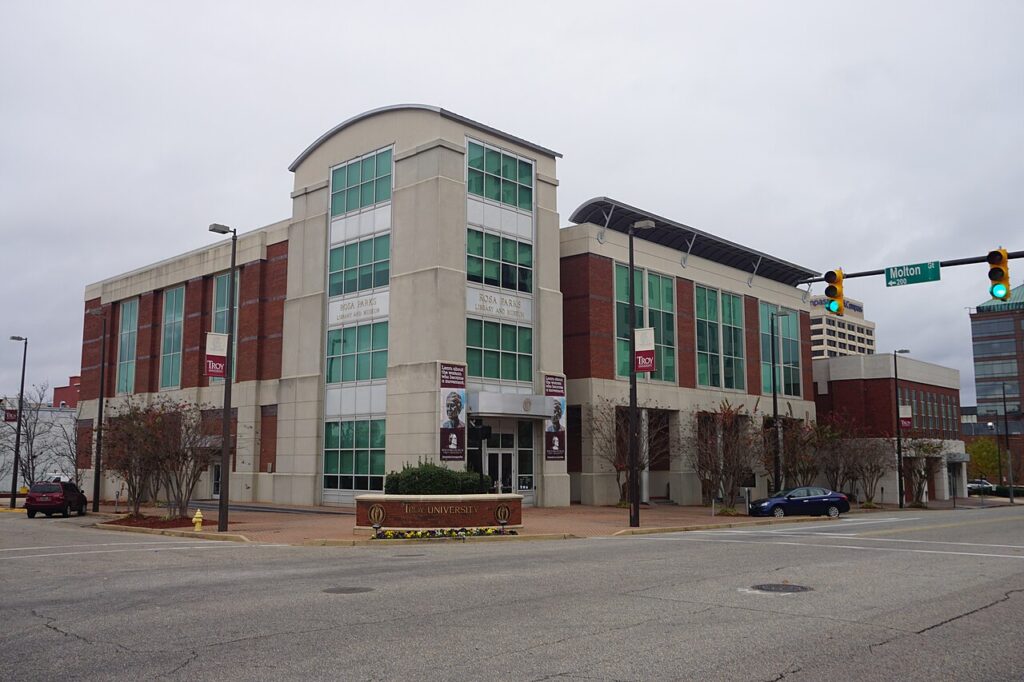
The same article describes six main exhibit areas plus a Children’s Wing. The Bus Room features a period bus, the fingerprint machine and the original arrest record from Parks’s arrest. Another area is a façade of the Holt Street Baptist Church, where the first organizational meetings of the boycott took place. The Victory Room recounts the day Fred Gray, Glenn Smiley, Martin Luther King Jr. and Ralph Abernathy rode in the two front seats of a city bus.
In the Children’s Wing, the Cleveland Avenue Time Machine takes visitors from 1955 Montgomery back to the nineteenth century to see scenes of segregation and legal challenges to it. A second-floor Research Center covers the legal and social challenges relating to the boycott.
Dexter Avenue King Memorial Baptist Church
The National Park Service lists Dexter Avenue King Memorial Baptist Church at 454 Dexter Avenue, Montgomery, with the designations National Register of Historic Places and National Historic Landmark. It says Martin Luther King Jr. served as pastor from 1954 to 1960.
The same page calls the church the backbone of the 1955-1956 Montgomery bus boycott, the first locally initiated mass protest against racial discrimination. On December 4, local Black leaders met at the church and formed the Montgomery Improvement Association, and they named the church’s new minister, King, its president. The bus company desegregated its buses only after November 13, 1956, when the Supreme Court ruled Alabama’s bus segregation laws unconstitutional.
The National Park Service lists the church as not open to the public (“Open to public: No”), so check with the congregation before planning an interior visit. The Encyclopedia of Alabama places the Civil Rights Memorial and its center around the corner from the church.
Freedom Rides Museum
The Encyclopedia of Alabama locates the Freedom Rides Museum at 210 S. Court Street, in the historic Greyhound bus station where Freedom Riders stopped on May 20, 1961, and faced violent attacks by white supremacists for using the whites-only waiting room. The station was built in 1951 by architect William Strudwick Arrasmith in the Streamline Moderne variant of Art Deco.
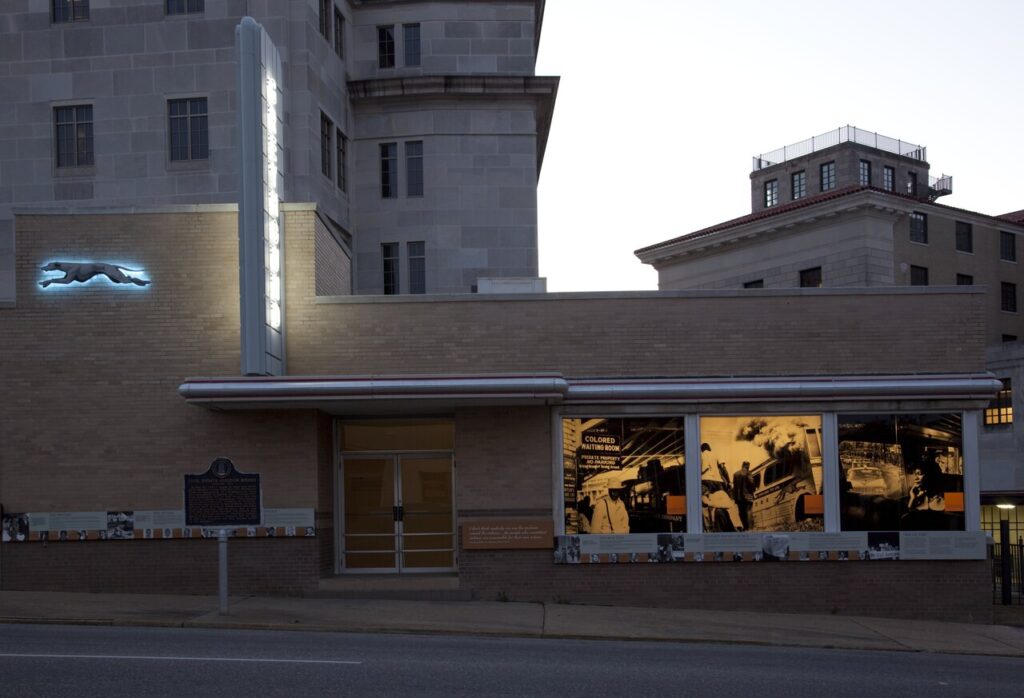
The same article says the bus station closed in 1995 and a historic marker was placed at the site in 1996. A 2009 renovation turned the station into a museum, and the building was listed on the National Register of Historic Places on May 16, 2011. The Alabama Historical Commission owns and operates the museum, which opened in May 2011 to commemorate the fiftieth anniversary of the Freedom Rides. Opening days, hours and admission are best confirmed with the Alabama Historical Commission before a visit.
Civil Rights Memorial
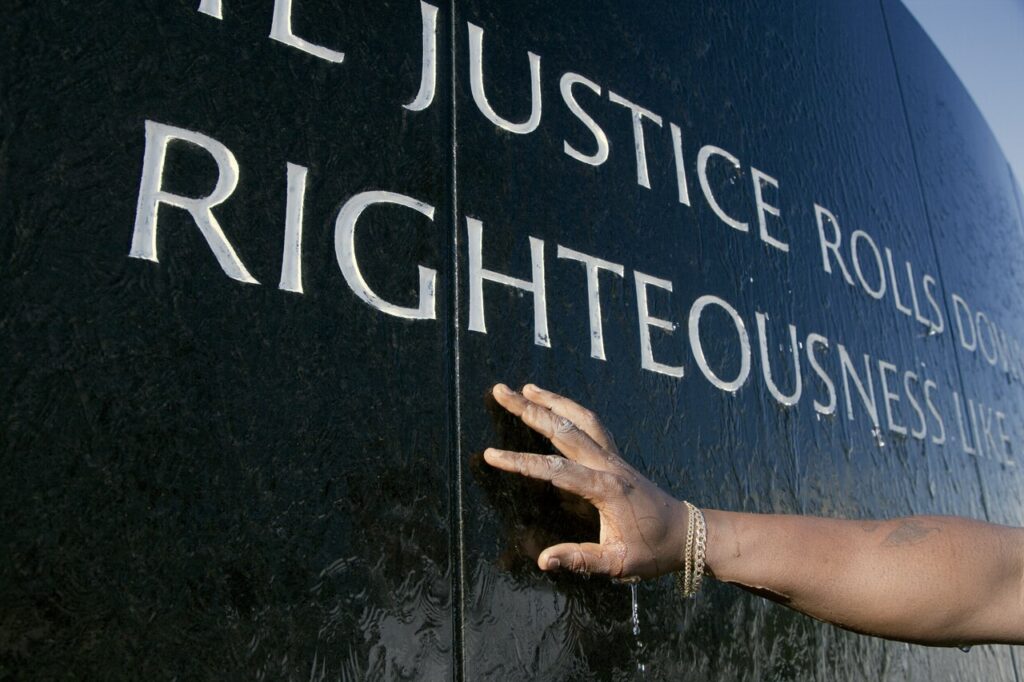
The Encyclopedia of Alabama places the Civil Rights Memorial and Civil Rights Memorial Center at 400 Washington Avenue, across the street from the Southern Poverty Law Center. Maya Lin, who also designed the Vietnam Veterans Memorial in Washington, D.C., designed the memorial, which was dedicated on November 5, 1989.
The same article says the Civil Rights Memorial Center opened in 2005 and hosts a display called “The Forgotten,” which includes the names of 74 men and women whose deaths during the civil rights era suggest they were victims of hate crimes, but whose names are not inscribed on the memorial. Confirm current opening times and admission with the center before going.
Selma-to-Montgomery trail endpoint
The National Park Service says Congress established the Selma to Montgomery National Historic Trail in 1996 to commemorate the 1965 Voting Rights March; the trail runs 54 miles and has three visitor centers, in Selma, Lowndes County and Montgomery. In its history of the marches, the National Park Service gives this timeline:
- March 7: approximately 600 protestors set out from Selma toward Montgomery and were stopped (NPS).
- March 9: Dr. King led a second march of approximately 2,000 protestors, known as the Ministers March, which turned back (NPS).
- March 17: Federal Judge Frank M. Johnson, Jr. ruled that the march could go on to Montgomery (NPS).
- March 21: the final march began with more than 8,000 protestors and lasted five days (NPS).
- March 25: the crowd reaching the state capitol had grown to nearly 25,000, and King gave his “Our God is Marching On” speech on the capitol grounds (NPS).
The march therefore ended at the Alabama State Capitol, which is the endpoint visitors can see in Montgomery.
Planning a visit
Experience Montgomery’s downtown Riverwalk page says you can walk from a civil rights site to a riverfront concert stage in just minutes, and Marriott’s Renaissance Montgomery event page says the hotel at the Convention Center is only blocks away from the Legacy Museum and the National Memorial for Peace and Justice. For a broader list of attractions, see the things to do in Montgomery guide, and for lodging near these sites see where to stay in downtown Montgomery.
- Reserve the Legacy Museum timed entry ahead, since entry runs in one-hour windows.
- Give the Legacy Museum a half day or more and treat the other sites as shorter stops.
- Confirm hours with each operator. EJI, the National Park Service and the museums publish current schedules.
FAQ
What are the main civil rights sites in Montgomery?
The Legacy Museum and National Memorial for Peace and Justice, the Rosa Parks Museum, Dexter Avenue King Memorial Baptist Church, the Freedom Rides Museum, the Civil Rights Memorial and the Alabama State Capitol anchor most itineraries. Each has its own section above.
How long does the Legacy Museum take?
Experience Montgomery suggests 3 to 5 hours for the museum, plus time for the memorial and monument. Entry is timed, so book a slot ahead.
Can I go inside Dexter Avenue King Memorial Baptist Church?
The National Park Service lists the church as not open to the public, so check with the congregation before planning an interior visit.
Where is the Civil Rights Memorial?
It sits on Washington Avenue in downtown Montgomery, near Dexter Avenue King Memorial Baptist Church, as described in the Civil Rights Memorial section above.
Where did the Selma-to-Montgomery march end?
The National Park Service says the final day’s crowd reached the Alabama State Capitol, where King spoke on the capitol grounds.
Sources: Experience Montgomery, EJI Legacy Sites, National Park Service, and Encyclopedia of Alabama.
Photo credits: Carol M. Highsmith, Library of Congress (via Wikimedia Commons) (Public domain (Carol M. Highsmith Archive, LoC)); Carol M. Highsmith, Library of Congress (via Wikimedia Commons) (Public domain (Carol M. Highsmith Archive, LoC)); Michael Barera (via Wikimedia Commons) (CC BY-SA 4.0).