The best things to do in Montgomery AL center on downtown: the Alabama State Capitol, the Rosa Parks Museum, the Legacy Sites and the Riverfront Park on the Alabama River, all close together.
| Stop | What it is | Where |
|---|---|---|
| Alabama State Capitol | Seat of state government and endpoint of the 1965 Selma to Montgomery March | 600 Dexter Avenue |
| Rosa Parks Museum | Troy University museum at the site of Rosa Parks’s arrest | 252 Montgomery Street |
| Legacy Museum | Part of the four-site Legacy Sites run by the Equal Justice Initiative | 400 N. Court Street |
| Riverfront Park | Amphitheater, riverboat cruises and splash pad along the Alabama River | Downtown Montgomery |
| Montgomery Museum of Fine Arts | Fine arts museum founded in 1930; free entry | One Museum Drive |
Addresses and descriptions come from the National Park Service, Legacy Sites, Troy University, Montgomery Museum of Fine Arts and Experience Montgomery pages. Opening days, hours and admission change, so check each official page before planning a day.
Montgomery at a glance
According to the Encyclopedia of Alabama, Montgomery was formed in 1819 when two of three small riverbank settlements merged, and it was named for Gen. Richard Montgomery, a Revolutionary War hero. The city sits on the Alabama River in central Alabama. The legislature chose it as the state capital in 1846, and the current capitol, completed in 1851, still serves that role. The US Census Bureau counted 200,603 residents in the April 1, 2020 census.
For visitors, the useful point is how compact the historic core is. Dexter Avenue, named for the early promoter Andrew Dexter, was once Market Street, and the Capitol sits at its address of 600 Dexter Avenue. Several of the stops below are in the same downtown area. Visitors planning a conference trip can pair this guide with the AFITC conference guide and the page on where to stay in downtown Montgomery.
The Alabama State Capitol and Dexter Avenue
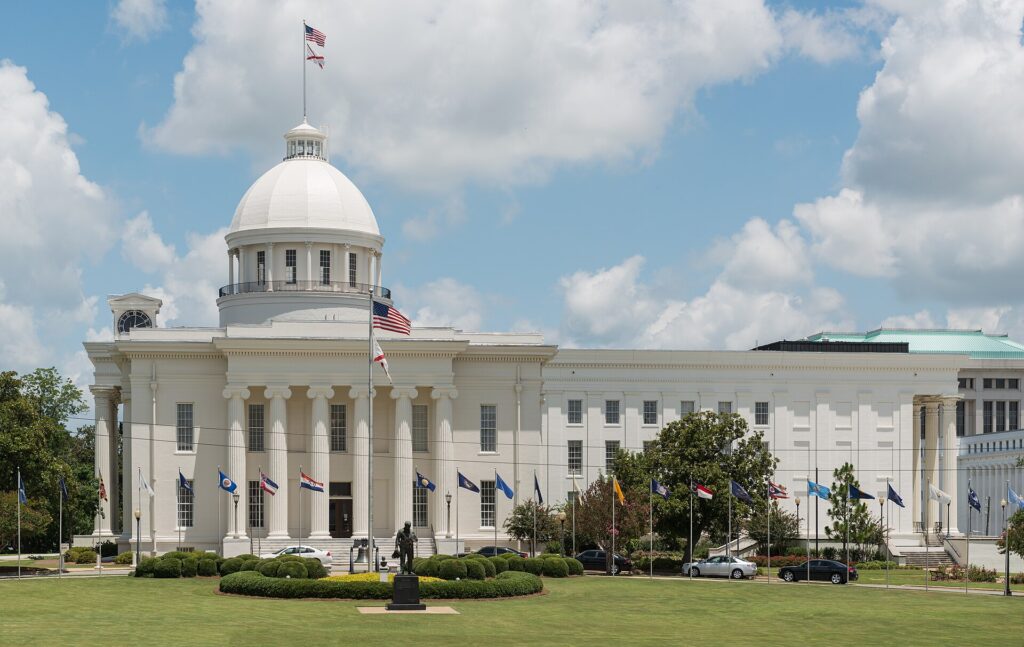
The Alabama State Capitol stands at 600 Dexter Avenue. The National Park Service lists it as the destination of the 1965 Selma to Montgomery March. On March 25, 1965, the march arrived at the Capitol; marchers were not allowed on the steps, so a flatbed truck served as the stage for speeches, including Dr. Martin Luther King Jr.’s “Our God is Marching On” speech. On August 6, 1965, President Lyndon B. Johnson signed the Voting Rights Act into law.
The final leg of the march down Dexter Avenue also passed Dr. King’s former church, Dexter Avenue Baptist Church, according to the same NPS page, so the street ties the state’s political and civil rights history together. The guide to Montgomery civil rights sites covers that history in more depth.
Museums and memorials
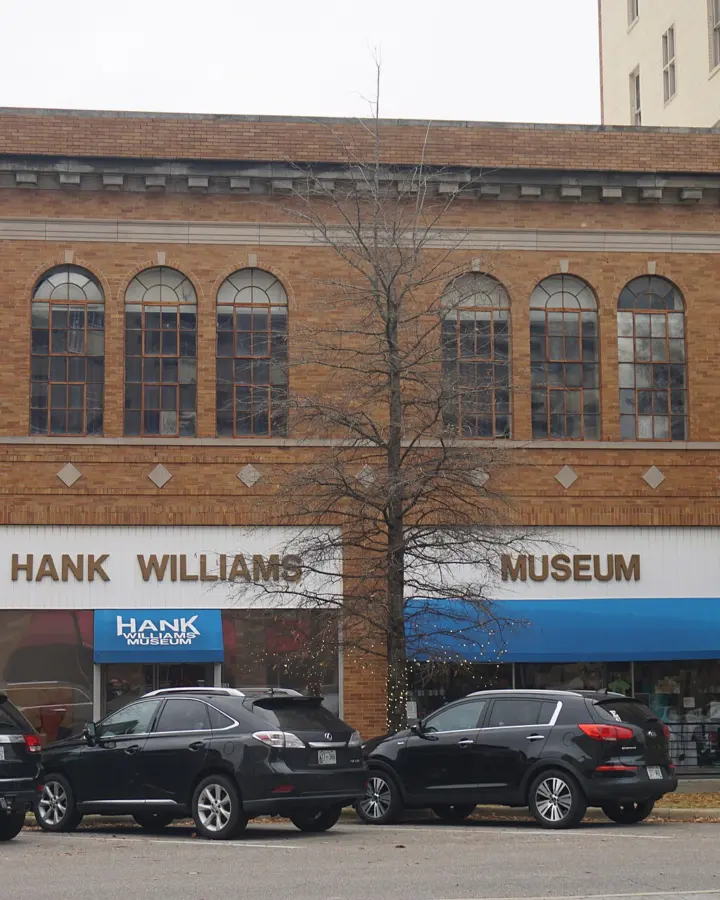
The Encyclopedia of Alabama names a wide range of museums in the city, including the Alabama Department of Archives and History, the Hank Williams Museum, the Scott and Zelda Fitzgerald Museum, the Montgomery Museum of Fine Arts, the Freedom Rides Museum, the Troy University Rosa Parks Museum and the Legacy Museum.
Rosa Parks Museum
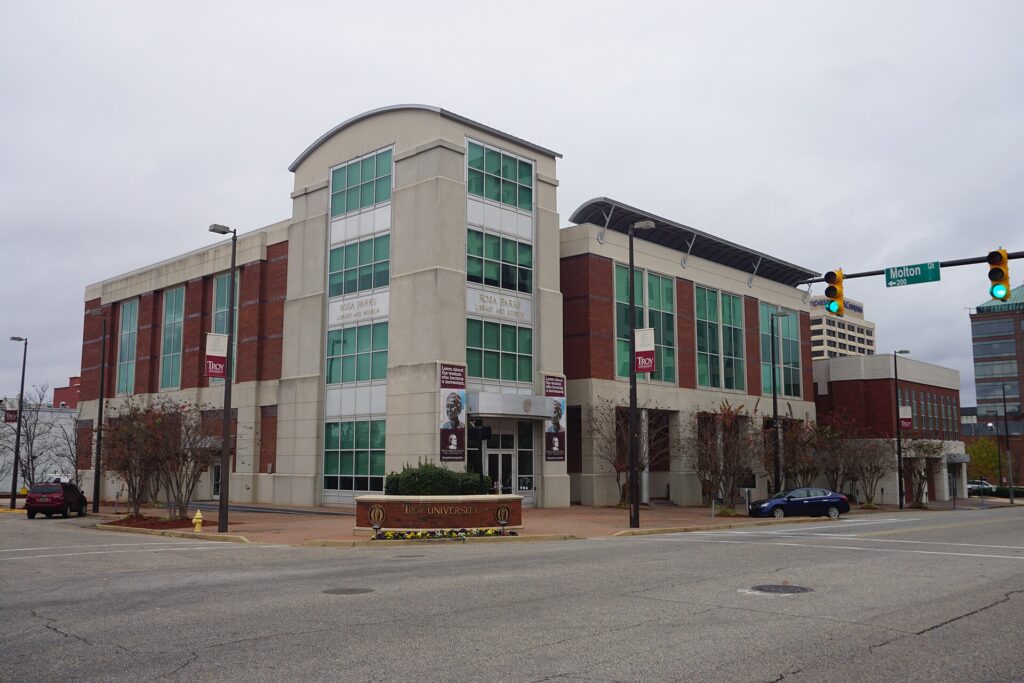
The museum stands downtown at the site where Rosa Parks was arrested, and Troy University describes it as the nation’s only museum dedicated to her. It is at 252 Montgomery Street, with the Children’s Wing at 220 Montgomery Street. The grand opening was December 1, 2000. The collection includes the original fingerprint arrest record, a 1950s-era Montgomery city bus and a restored 1955 station wagon known as a “rolling church.” The Children’s Wing includes the Cleveland Avenue Time Machine, which takes visitors back to the 1800s and the onset of Jim Crow segregation.
Legacy Sites
The Equal Justice Initiative’s Legacy Sites include four locations: the Legacy Museum at 400 N. Court Street, the National Memorial for Peace and Justice at 417 Caroline Street, Freedom Monument Sculpture Park at 831 Walker Street, and Montgomery Square at 540 Montgomery Street. One general admission ticket covers all four sites. Free shuttles run between the sites every 15 minutes, Montgomery Square is about a 4-minute walk from the memorial, and a 15-minute boat ride on the Alabama River runs from the Boat Launch at 101 Morris Street to Freedom Monument Sculpture Park.
Montgomery Museum of Fine Arts
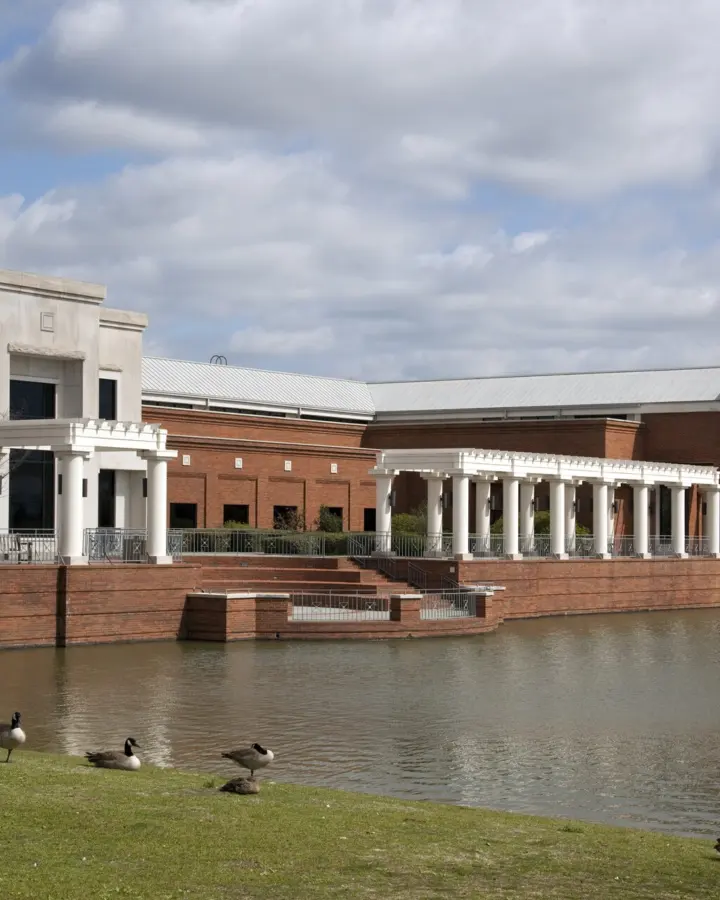
According to the museum’s history page, it was founded in 1930 by artist John Kelly Fitzpatrick, Mrs. Harry S. Houghton and the “Morning View Painters.” It opened in Blount Cultural Park in 1988, in a 43,000-square-foot facility at One Museum Drive, with free entry and free parking. Its collection includes Mary Cassatt’s Francoise in Green, Sewing, Thomas Hart Benton’s Ozark Autumn, a Studio Art Glass collection of 52 pieces, 100 photographs by Yousuf Karsh and the 500-work Weil Collection built around Old Master prints.
Riverfront Park and the Downtown Riverwalk
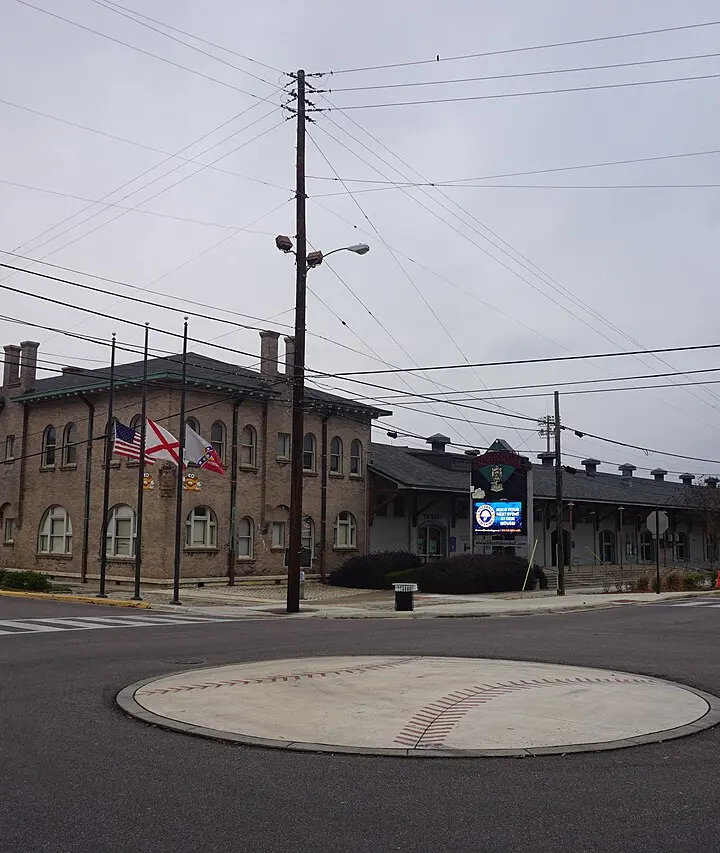
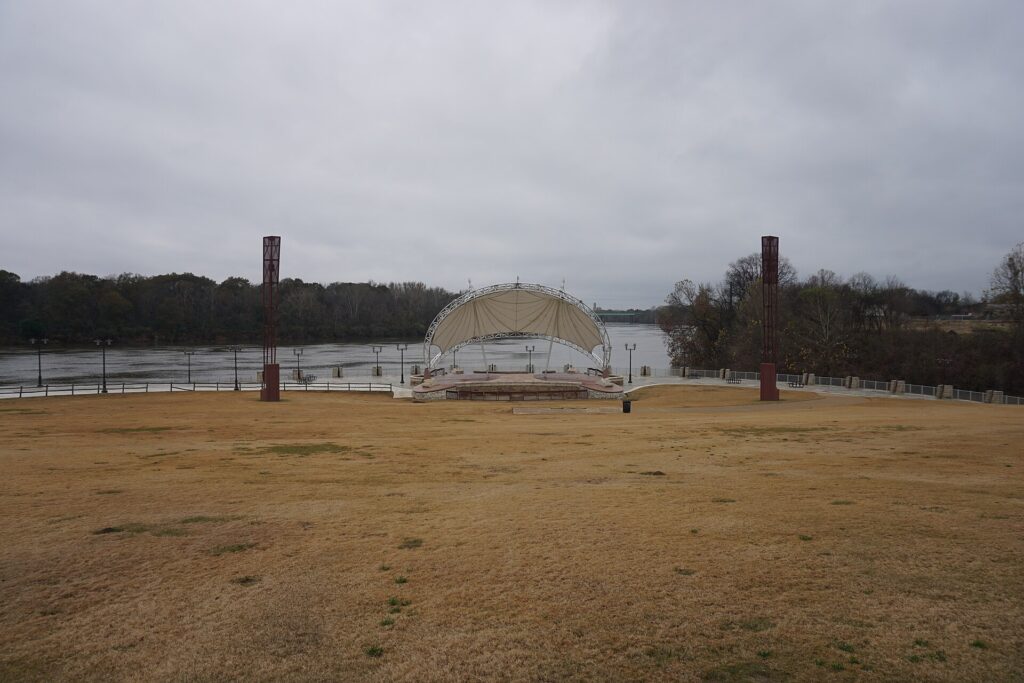
Riverfront Park lies along the Alabama River in downtown Montgomery. Experience Montgomery lists the Riverwalk Amphitheater, which hosts outdoor concerts, festivals and community events; the Harriott II Riverboat, which offers Alabama River cruises; a free seasonal splash pad; and the Montgomery Lions Club Children’s Sensory Trail. Nearby are the Sip-n-Cycle Pedal Cruise, a 20-passenger pedal boat with music, and the historic Union Station Train Shed, the site of the Riverbend Brew Fest.
Baseball fans can catch a Montgomery Biscuits game at DABOS Park, which Experience Montgomery lists among the sites near Riverfront Park. The Encyclopedia of Alabama also notes that the Montgomery Whitewater Park opened in 2023.
Where to eat near the river
Experience Montgomery names Red Bluff Bar at the Silos, which combines river views, drinks, lawn games and live entertainment overlooking the riverfront near the amphitheater. For a meal near the Legacy Sites, the Legacy Sites visitor page lists Pannie-George’s Restaurant at the Legacy Museum, AYA Soulful Dining at Elevation Hotel, Little Donkey Mexican and Plaza Pizza.
The Encyclopedia of Alabama also identifies Cloverdale, Cottage Hill and the Garden District as neighborhoods that expanded between 1940 and 1950, and Old Alabama Town as a living-history museum. Visitors who want a break from downtown can include them in a longer stay.
Maxwell Air Force Base for conference visitors
Maxwell Air Force Base and Gunter Annex are in Montgomery, according to Military OneSource. Maxwell sits in the northwest corner of the city. Air University, a major component of Air Education and Training Command and the Air Force’s center for professional military education, is based there, and the 42d Air Base Wing and the 908th Airlift Wing are among the units listed at Maxwell-Gunter. The Encyclopedia of Alabama likewise describes Air University as the Air Force’s advanced educational center for officers.
Anyone attending an Air Force event in Montgomery can read the AFITC conference guide for context on the conference and its audience. Base access follows the installation’s own rules, so visitors should check with the event organizers or the base before planning to go on.
More Montgomery guides
Each of these places has its own guide with history and visiting details.
- the Montgomery Zoo: its continental realms, its history and the Mann Wildlife Learning Museum.
- Old Alabama Town: the Landmarks Foundation’s six-block museum of restored 19th-century buildings.
- the Montgomery Museum of Fine Arts: the Blount Collection, ArtWorks and the sculpture garden in Blount Cultural Park.
- the Hank Williams Museum: the exhibits, the statue and the singer’s grave.
- Montgomery Biscuits baseball at Riverwalk Stadium: the Double-A team and its converted train-shed ballpark.
Frequently asked questions
What are the main things to do in Montgomery, AL?
Core stops are the Alabama State Capitol, the Rosa Parks Museum, the Legacy Sites, the Montgomery Museum of Fine Arts and Riverfront Park.
Can the main sights be reached on foot from downtown?
Many are close together. The Capitol and Dexter Avenue, the Rosa Parks Museum and the Riverfront sit in the downtown core, and the Legacy Sites run free shuttles every 15 minutes between their four locations.
What can visitors do at Riverfront Park?
The park has the Riverwalk Amphitheater, Harriott II river cruises, a seasonal splash pad and a children’s sensory trail, with the Union Station Train Shed and DABOS Park nearby.
Where is Maxwell Air Force Base?
Maxwell is in the northwest corner of Montgomery and is home to Air University, according to Military OneSource.
Photo credits: DXR (CC BY-SA 4.0); Michael Barera (CC BY-SA 4.0); Michael Barera (CC BY-SA 4.0).